
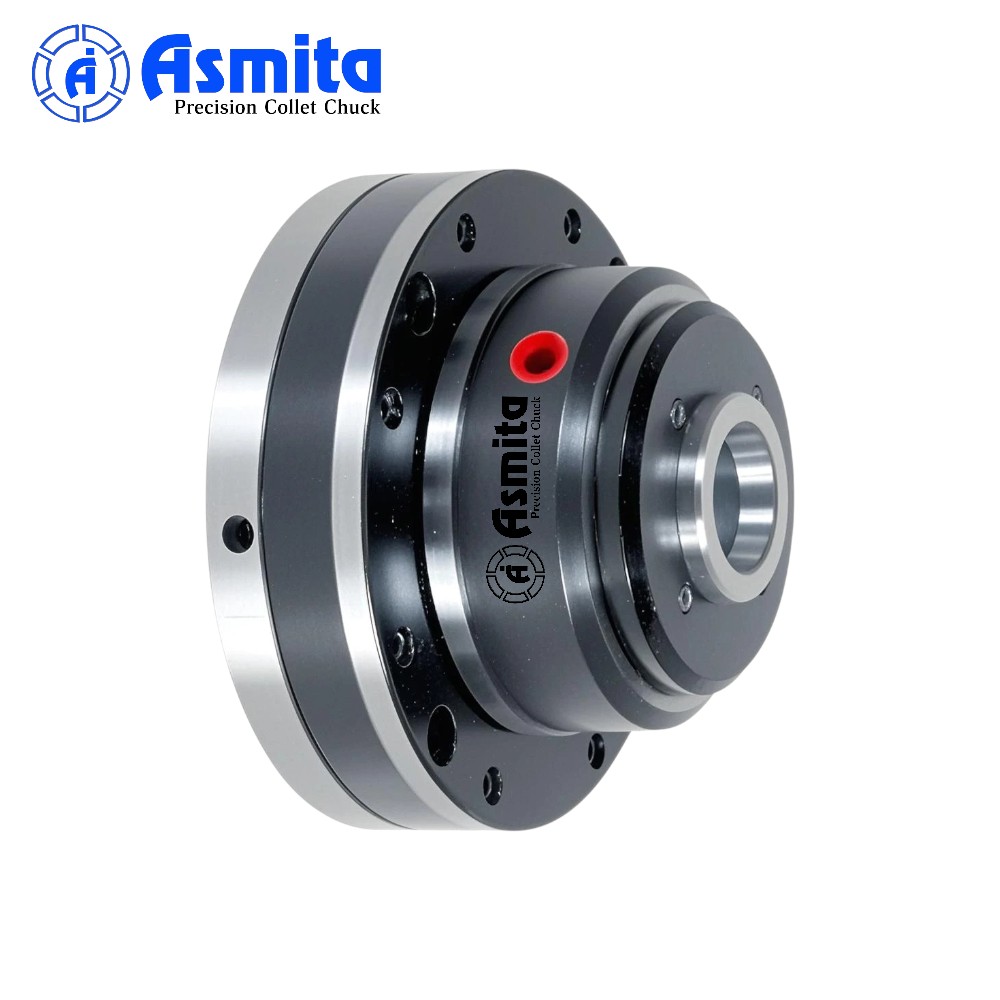
A pneumatic chuck is a type of chuck used in machining and tooling applications to securely hold and clamp workpieces. It utilizes compressed air to operate, providing a quick and efficient clamping mechanism. Pneumatic chucks are typically used in industrial settings where precision, speed, and reliability are essential.
These chucks consist of a gripping mechanism, often with movable jaws or grippers, that can be adjusted to accommodate different workpiece sizes and shapes. The clamping force is controlled by adjusting the air pressure supplied to the chuck. This allows for customization of the grip strength according to the specific requirements of the machining operation.
Pneumatic chucks offer several advantages, such as ease of operation, high clamping accuracy, versatility, and compatibility with various automated systems. They are commonly used in CNC machines, lathes, milling machines, and other equipment where secure holding of workpieces is necessary.
Pneumatic rotary Collet Chuck is a clamping device powered by compressed air that will hold and rotate the workpiece in any type of rotary machining operation. In general, the chucks use a certain rotating mechanism that applies force through air pressure to clamp the workpiece so that milling, turning, drilling, or any other machining operation can be performed.
The pneumatic rotary chuck works by means of air cylinders that bear against the workpiece or its holding fixtures to effect clamping. Such chucks are designed for different sizes and materials, thus providing versatility of tools in automated systems.
Key Features of Pneumatic Rotary Chucks:
· Air-driven clamping mechanism
· High precision and repeatability
· Automated and efficient operation
· Compact design for space-saving
· Flexible clamping force adjustment
How Does a Pneumatic Rotary Chuck Work?
The principle behind the operation of a pneumatic rotary chuck is rather basic. It uses compressed air to actuate a set of air cylinders that, in turn, engage either jaws or clamps on the chuck to hold a workpiece firmly. The following discusses how it works.
1. Air Supply:
Supply air to the chuck through an air inlet. Adjust the pressure of the air with a regulator.
2. Clamping Action
When it gets into the system, pistons inside the chuck are actuated which in turn actuate clamping jaws or fixtures. These jaws apply just the right amount of force to hold on to a workpiece and keep it secured in position.
3. Rotation
In most designs, rotation is powered by a separate motor but can also be powered by the same pneumatic system. Rotation allows the workpiece to be positioned and rotated completely under control during further machining processes.
4. Release
When it is time to remove the workpiece, releasing air pressure opens the chuck and releases the workpiece.
Working Principle of a Pneumatic Rotary Chuck
The pneumatic rotary chuck operates using basic principles of air pressure and mechanical motion:
1. Air Pressure: The air pressure applied to the chuck activates a piston or set of pistons within the chuck body. This pressure creates the necessary clamping force to hold the workpiece securely.
2. Rotational Movement: The chuck uses either an integrated motor or an air-driven mechanism to enable the rotation of the clamped workpiece.
3. Precise Control: The use of adjustable pressure settings ensures that the chuck can apply the exact clamping force required, preventing damage to the workpiece while maintaining accuracy.
Feather of Pneumatic Clamping:
1. Fast and Efficient
Production rates can easily be attained because the system works at high speeds.
2. Smooth Operation
Smooth in operation since it runs on air chucks, clamping will be very smooth and uniform with no possibility of any mechanical binding taking place inside.
3. Adjustable Clamping Force
Force adjustable clamps, a particular degree of force for clamping that material workpieces are made from different materials, is attained since force can be adjusted in the systems.
Differences Between Pneumatic Rotary Chucks and Traditional Chucks
Traditional Mechanical Chucks
1. Manual or motor-driven clamping
2. Limited adjustability of clamping force
3. Slower operation in some models
4. Bulkier and heavier design
May require more maintenance due to mechanical parts
Pneumatic Rotary Chucks
1. Air-driven clamping force
2. Quick response and automatic operation
3. More compact and space-efficient
4. Highly adjustable for different applications
5. Less mechanical wear and tear, leading to lower maintenance
The key difference is that pneumatic rotary chucks use compressed air for the clamping force, whereas traditional chucks often rely on mechanical means such as manual tightening or motorized systems.
Some of the standout features of pneumatic rotary chucks include:
1. Automatic Clamping and Release: Reduces human intervention and increases automation.
2. Adjustable Air Pressure: Allows for customization of clamping force based on workpiece material and size.
3. High Repeatability: Ensures precise alignment for multiple machining cycles.
4. Enhanced Durability: With fewer moving mechanical parts, pneumatic chucks experience less wear and tear.
Advantages of Pneumatic Rotary Chucks
1. Enhanced Precision and Stability
Pneumatic rotary chucks deliver exceptional precision, ensuring workpieces are held securely without any slip or misalignment during machining. This ensures high-quality surface finishes and tight tolerances.
2. Increased Efficiency
With pneumatic actuation, these chucks allow for rapid clamping and rotation, reducing cycle times and increasing throughput in manufacturing environments.
3. Easy Automation
Pneumatic rotary chucks can be integrated seamlessly into CNC machines, robotic arms, and automated workstations, making them ideal for high-volume, precision-driven applications.
4. Versatility
These chucks are capable of holding a wide variety of workpieces, including round, square, and irregularly shaped materials, thanks to their adjustable clamping jaws.
Pneumatic rotary chucks are versatile tools used in various industries. Some of their most common
Application of Pneumatic Rotary Chucks :
|
Application Area |
Example |
|
CNC Milling & Turning |
Used to hold and rotate workpieces during machining |
|
Automotive Industry |
Ideal for holding metal parts during machining or assembly |
|
Aerospace |
Used for precision machining of aircraft components |
|
Manufacturing |
Applied in automated systems for parts clamping and handling |
|
Metalworking |
For securing metal parts in CNC machining and grinding operations |
|
Submersible Pump industry |
For clamping stamping, shaft & bush for drilling/tapping |
How to Choose the Right Pneumatic Rotary Chuck?
Choosing the right pneumatic rotary chuck depends on a variety of factors:
1. Workpiece Size: Ensure the chuck can accommodate the diameter and length of the workpieces you plan to machine.
2. Clamping Force Requirements: Different materials and parts may require varying levels of clamping force. Adjustability is key.
3. Machine Compatibility: Make sure the chuck is compatible with your machine tool, such as CNC lathes or milling machines.
4. Precision Needs: For high-precision applications, choose a chuck that offers repeatability and accuracy within the required tolerance limits.
Maintenance Requirements for Pneumatic Rotary Chucks
Although pneumatic rotary chucks have fewer moving parts than traditional chucks, they still require regular maintenance to ensure consistent performance. Maintenance tasks include:
1. Regular air supply checks: Ensure that the compressed air supply is clean and free from moisture to prevent corrosion and ensure smooth operation.
2. Sealing ring inspection: Over time, seals may wear out, leading to air leaks. Check for any wear on the seals or O-rings and replace them as necessary.
3. Lubrication: Certain components of the chuck may require periodic lubrication, particularly the moving parts, to reduce friction and wear.
Clamping Precision of Pneumatic Rotary Chucks
Pneumatic rotary chucks are known for their high clamping precision. The use of adjustable air pressure allows for a consistent clamping force, ensuring that workpieces are held securely throughout the machining process. This is especially important for high-precision applications such as:
1. Micro-machining
2. Tight-tolerance parts
3. Surface finish application
· Regularly check air filters and moisture traps to ensure clean and dry air.
· Inspect seals and O-rings for signs of wear and replace them as necessary.
· Maintain the recommended air pressure levels and adjust them according to the workpiece requirements.
Conclusion
A rotary pneumatic chuck is an essential accessory to machining centers of today. It uses compressed air actuation to provide efficient, reliable, and precise clamping at the same time enhancing speed as well as accuracy hence general productivity in manufacturing processes.
Some major benefits over manually operated chucks include quick operation time, less number in the count of mechanical parts, and adjustable clamping force making them suitable for application wherever precision and speed are required.
To maximize the output of pneumatic rotary chucks, the right model has to be chosen according to application requirements, clamping force, and compatibility with the machine being used. Regular maintenance and correct troubleshooting increase the life of a chuck while keeping it operating at its best.